(By Oil & Gas 360) – Alaska may hold some of the largest undeveloped oil and natural gas resources in North America, yet attracting the capital needed to develop them remains a persistent challenge.

That contradiction is becoming increasingly apparent as policymakers seek to revive Arctic energy development while investors continue directing most of their dollars elsewhere. Despite renewed interest in North Slope production, major discoveries, and efforts to expand leasing opportunities, Alaska remains a difficult sell in a market increasingly focused on short-cycle returns and capital discipline.
The resource potential is enormous.
Alaska’s North Slope still contains billions of barrels of recoverable oil, while the Arctic National Wildlife Refuge is estimated to hold between 4 billion and nearly 12 billion barrels of technically recoverable crude. The National Petroleum Reserve-Alaska spans nearly 24 million acres and represents one of the largest undeveloped hydrocarbon regions in the United States.
Yet resource size alone has not translated into investor enthusiasm.
Recent federal lease sales have attracted limited participation despite the scale of the opportunity. While some industry players continue to pursue development opportunities, bidding activity has often fallen short of expectations, reflecting broader concerns about project timelines, costs, regulatory uncertainty, and long-term returns.
The contrast with the Permian Basin is striking.
While Alaska offers decades of potential production, the Permian offers something investors increasingly value more: speed. Wells can be drilled, completed, and brought online relatively quickly. Infrastructure already exists. Cash flow arrives faster. Investors who spent years demanding growth at any cost are now rewarding companies that prioritize shareholder returns, balance sheet strength, and capital efficiency.
That shift has fundamentally changed how large resource projects are evaluated.
Developing Alaska’s resources requires billions of dollars of investment, years of planning, and extensive infrastructure. Roads, pipelines, processing facilities, export terminals, and support systems must often be built long before production begins. In today’s investment environment, those long lead times can be difficult to justify when shorter-cycle opportunities exist elsewhere.
That does not mean Alaska lacks momentum.
Projects such as ConocoPhillips’ Willow development and Santos’ Pikka project are expected to help reverse decades of production decline and contribute meaningful new volumes to U.S. oil supply. The U.S. Energy Information Administration projects Alaska production could experience one of its largest increases in decades as these developments move forward.
Natural gas may represent an equally important opportunity.
The long-discussed Alaska LNG project continues to attract interest because of its potential to unlock vast stranded gas resources and connect them to growing Asian demand centers. If completed, the project would include an approximately 800-mile pipeline and export terminal capable of transforming Alaska into a major LNG supplier.
For supporters, the project represents far more than a gas export facility. It is viewed as a strategic infrastructure investment that could strengthen U.S. energy exports, create jobs, and provide long-term economic benefits to the state.
Yet the same questions remain.
Can projects requiring tens of billions of dollars and decades of planning compete for capital in a market increasingly focused on near-term returns?
Policy uncertainty continues to complicate the equation. Alaska has experienced significant swings in federal energy policy over the past several administrations, ranging from expanded leasing and development initiatives to restrictions and cancellations. For investors evaluating projects with multi-decade timelines, regulatory stability can be as important as the quality of the resource itself.
The issue is not geology, few energy professionals question Alaska’s resource potential. The challenge is creating enough certainty around economics, infrastructure, permitting, and policy to justify long-term investment.
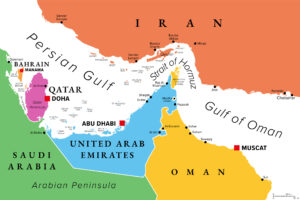
Ironically, the ongoing disruptions surrounding the Strait of Hormuz may strengthen Alaska’s strategic case.
As governments and markets increasingly focus on energy security, supply chain resilience, and domestic resource development, Alaska’s value extends beyond simple production growth. It represents one of the largest long-term energy opportunities located within a politically stable jurisdiction and supported by existing export infrastructure.
The market often underinvests in long-cycle resource projects during periods of abundant supply. Yet history repeatedly shows that concerns about energy security can rapidly change investment priorities.
The world’s easiest barrels have largely been found.
Future production growth will increasingly depend on projects that require patience, infrastructure, and long-term capital commitments.
Alaska has the resources, but are investors willing to look beyond the next quarter and recognize the strategic value sitting on America’s northern frontier?
About Oil & Gas 360
Oil & Gas 360 is an energy-focused news and market intelligence platform delivering analysis, industry developments, and capital markets coverage across the global oil and gas sector. The publication provides timely insight for executives, investors, and energy professionals.
Disclaimer
This opinion article is provided for informational purposes only and does not constitute investment, legal, or financial advice. The views expressed are based on publicly available information and market conditions at the time of publication and are subject to change without notice.
This article was automatically fetched from an external source.